Chinese
 deutsch
 Espanol
 Francais
 Italiano
 Portugues
 Japanese
 Korean
 Arabic
 Russian
 Urdu
Urdu Mongolian



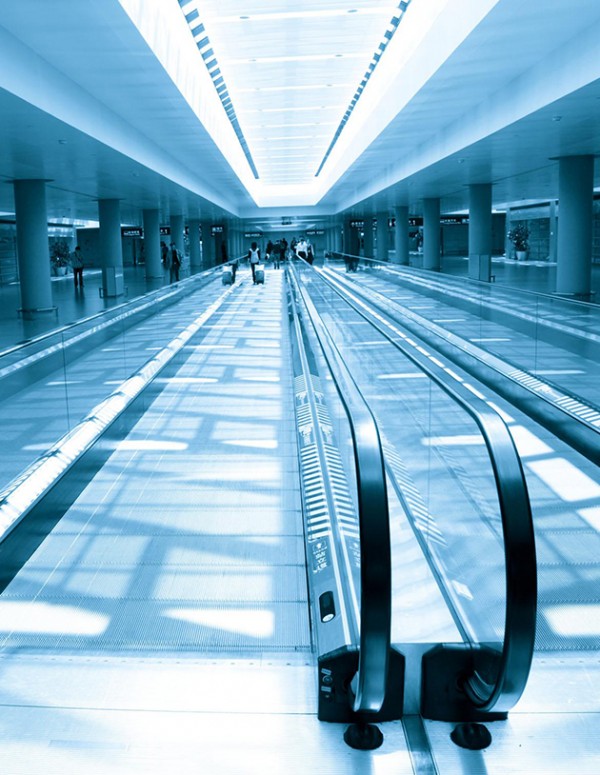
Moving Walkways, also known as travelators or moving sidewalks, are mechanized systems designed to transport people efficiently over short to medium distances. They are commonly found in airports, metro stations, shopping malls, and large commercial complexes, where they provide a convenient alternative to walking long distances. By combining speed, safety, and ease of use, moving walkways enhance the flow of pedestrian traffic in busy environments and contribute to a more comfortable travel experience.
History and Development of Moving Walkway
The concept of moving walkways dates back to the late 19th and early 20th centuries, with the first patents and installations appearing in world fairs and urban transport projects. Over time, technological advancements have transformed moving walkways from simple conveyor belts to sophisticated systems with advanced safety features, energy-efficient motors, and durable materials. Modern moving walkways are designed to handle high traffic volumes while maintaining smooth operation and minimizing maintenance requirements.
Design and Structure of Moving Walkway
A moving walkway consists of a flat or slightly inclined platform that moves continuously in a horizontal or inclined direction. The platform is typically made from durable metal plates or modular segments, supported by a motor-driven chain or belt system. Handrails move synchronously with the walkway to provide stability for passengers. Depending on the location and purpose, walkways can be single or dual-directional, straight or curved, and may incorporate features such as speed adjustments or accessibility ramps for wheelchairs and strollers.
Applications in Modern Infrastructure of Moving Walkway
Moving walkways are primarily used in transportation hubs such as airports, where long terminals require efficient movement of passengers. They also find applications in metro stations, exhibition centers, large shopping malls, and pedestrian tunnels. In some urban areas, outdoor moving walkways are installed to assist pedestrians on steep inclines or to connect public spaces. The adaptability of moving walkways makes them suitable for various environments, improving both accessibility and convenience for users.
Safety and Maintenance of Moving Walkway
Safety is a critical aspect of moving walkway design. Modern systems incorporate emergency stop buttons, anti-slip surfaces, and safety sensors to prevent accidents. Clear signage and lighting guide passengers and encourage proper use, while regular maintenance ensures smooth operation and longevity of the system. Routine inspection of mechanical and electrical components, along with prompt repair of worn-out parts, is essential for maintaining reliability and passenger confidence.
Benefits and Efficiency of Moving Walkway
Moving walkways offer several advantages in busy public spaces. They reduce travel time for passengers, improve the flow of pedestrian traffic, and provide a convenient alternative for people with mobility challenges. By minimizing physical exertion, they enhance the overall user experience, particularly in airports or transit stations where travelers often carry luggage. Additionally, energy-efficient designs contribute to lower operational costs while maintaining high performance.
Conclusion
Moving walkways have become an integral part of modern infrastructure, providing an effective solution for transporting people over medium distances. With their blend of convenience, safety, and efficiency, they enhance the experience of travelers and visitors in airports, metro stations, shopping centers, and other public spaces. As technology continues to advance, moving walkways are likely to become even more reliable, accessible, and energy-efficient, cementing their role as a key component in the design of pedestrian-friendly environments.